With legacy television subscriptions regularly surpassing $130 per month and locking viewers into restrictive hardware leases, Internet Protocol Television offers direct, high-bandwidth streaming across everyday devices.
However, the 2026 streaming market presents a stark divide. On one side are enterprise platforms running distributed Content Delivery Networks (CDNs) and dedicated hardware encoders. On the other side are fly-by-night resellers operating congested single-server setups that inevitably freeze during championship sports broadcasts.
This guide establishes the definitive technical benchmarks for evaluating an IPTV service in 2026. We examine network infrastructure, video codecs, player ecosystems, and pricing models to help you select a dependable, buffer-free service.

1. The 2026 Television Shift: Why Modern Viewers Are Leaving Broadcast Giants
The migration away from traditional broadcast television is no longer just about cutting costs—it is fundamentally about transmission efficiency and viewer control.
Traditional cable relies on synchronous radio-frequency (RF) signals distributed across coaxial networks. Every channel in the provider's lineup occupies physical bandwidth simultaneously, whether anyone in your household is watching it or not. This legacy model forces cable companies to compress signals aggressively, resulting in washed-out color grading and noticeable motion blur during fast camera pans.
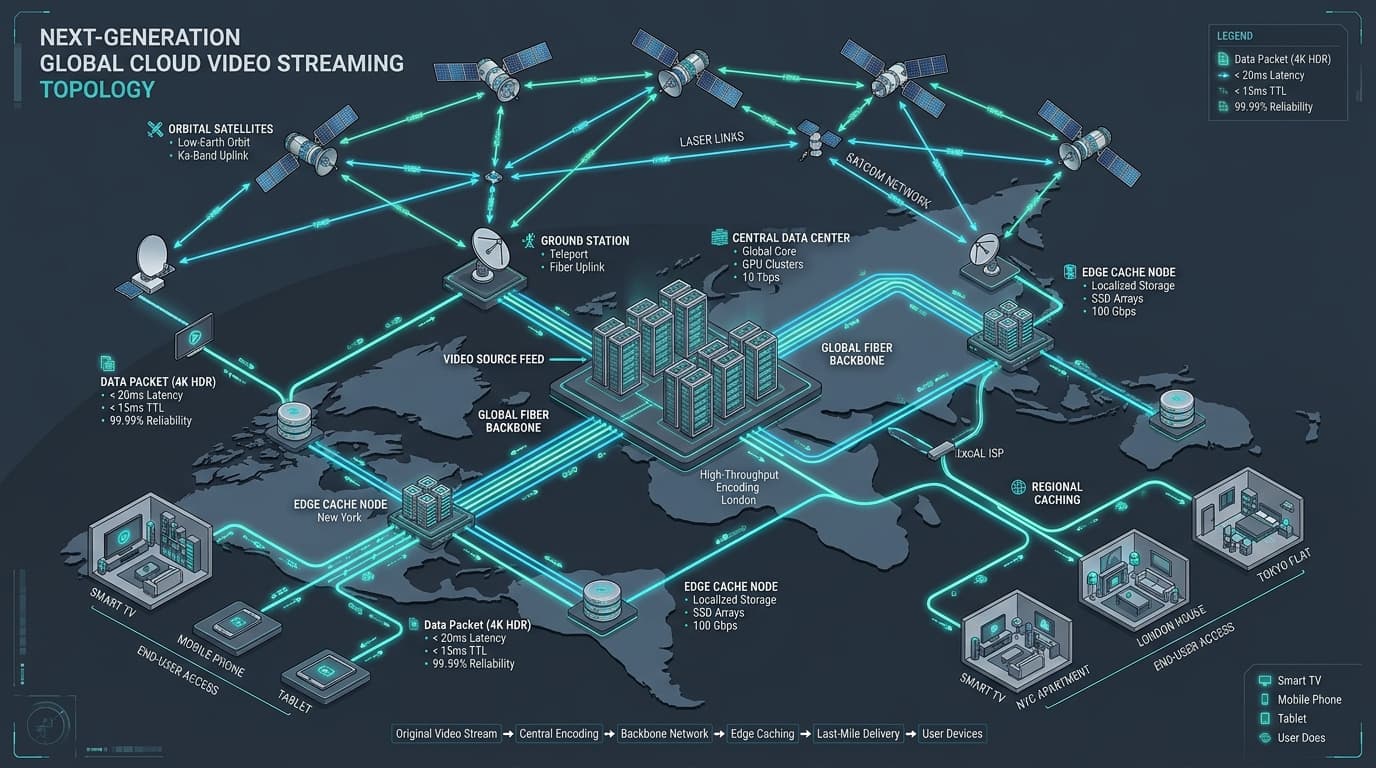
The best iptv service 2026 operates on asynchronous unicast IP delivery. When you select a broadcast feed, your device establishes a point-to-point connection to a regional edge server. Only the data packets for your active stream travel across your home broadband line.
Dedicated Bitrates
Video streams receive 15 to 25 Mbps of uncompressed bitrate rather than the choked 4 to 6 Mbps standard on legacy broadcast cable.
Native 60 FPS Feeds
Feeds support native 50/60 FPS frame rates, multi-language audio tracks, and uncompressed Dolby 5.1 surround sound passthrough.
Cloud DVR Control
Instant access to 7-day catch-up archives, live pause, and unified on-demand movie libraries without physical DVR hardware attachments.
To understand the core networking protocols behind modern IP broadcasting, review our detailed guide on how IPTV works.
2. The 2026 Technology Benchmark: What Powers the Best IPTV Service
The technical gap between premium IPTV providers and budget resellers has widened considerably. In 2026, premier platforms operate on four critical engineering pillars:
Multi-CDN Edge Routing & Anti-Freeze Architecture
Outdated IPTV providers funnel all subscribers through a single data center. When millions tune into high-stakes sporting events, single servers choke under connection exhaustion. Top-tier services deploy a hybrid multi-CDN architecture. Live feeds are replicated across edge caching nodes globally, routing packets to the node with latency under 20ms.
Next-Gen Codecs: HEVC (H.265) & Hardware AV1
Legacy distribution relied heavily on H.264 (AVC). Modern 2026 platforms encode their flagship feeds in H.265 (HEVC) and hardware AV1, reducing bandwidth consumption by 50% while preserving raw 4K field detail and deep HDR contrast on modest 8–15 Mbps household lines.
Native 60 FPS Sports Broadcasts vs. 30 FPS Downsampling
Nothing ruins live sports faster than jittery motion. High-tier IPTV services source feeds directly from broadcast masters at 50 or 60 FPS. Budget resellers downsample feeds to 30 FPS to save on server costs, causing noticeable motion blur whenever soccer balls or race cars cross the screen.
Sub-Second Channel Switching (Fast Zapping)
Through optimized HTTP Live Streaming (HLS) chunk sizes and in-memory edge caching, premier services reduce channel initialization times to under 1.2 seconds, making channel zapping feel as immediate as terrestrial television.
Explore how our infrastructure delivers 99.9% uptime on the IPTV streaming features overview.
3. Essential Feature Architecture for 2026
When evaluating prospective providers, verify that the service includes these core operational capabilities:
Automated XMLTV Electronic Program Guide (EPG)
An IPTV service without an accurate guide creates unnecessary friction. Premier platforms provide an automated EPG feed via XMLTV URL that updates continuously: full 7-day schedule coverage across major domestic and international networks, program descriptions, and automated local time offset synchronization.
Xtream Codes API Handshake vs. Static M3U Playlists
While raw M3U playlist URLs remain functional, they are cumbersome to manage on TV remotes and require downloading massive text files every time channels update. The industry benchmark is the Xtream Codes API, which connects your player to the server database via URL, username, and password, sorting Live TV, Movies, and Series into clean tables with instant synchronization.
Flexible Multi-Room Connections
Modern households stream across multiple rooms simultaneously. The best providers offer scalable multi-connection subscription plans that allow independent viewing in the living room, bedroom, and mobile devices without arbitrary IP locks.
4. Hardware Ecosystem & Network Optimization in 2026
An IPTV service is only as capable as the streaming hardware decoding its video packets. Selecting the right playback device and player application is vital for peak stability.
| Device Model | Processor / Spec | Hardware Decoding | Best Suited For |
|---|---|---|---|
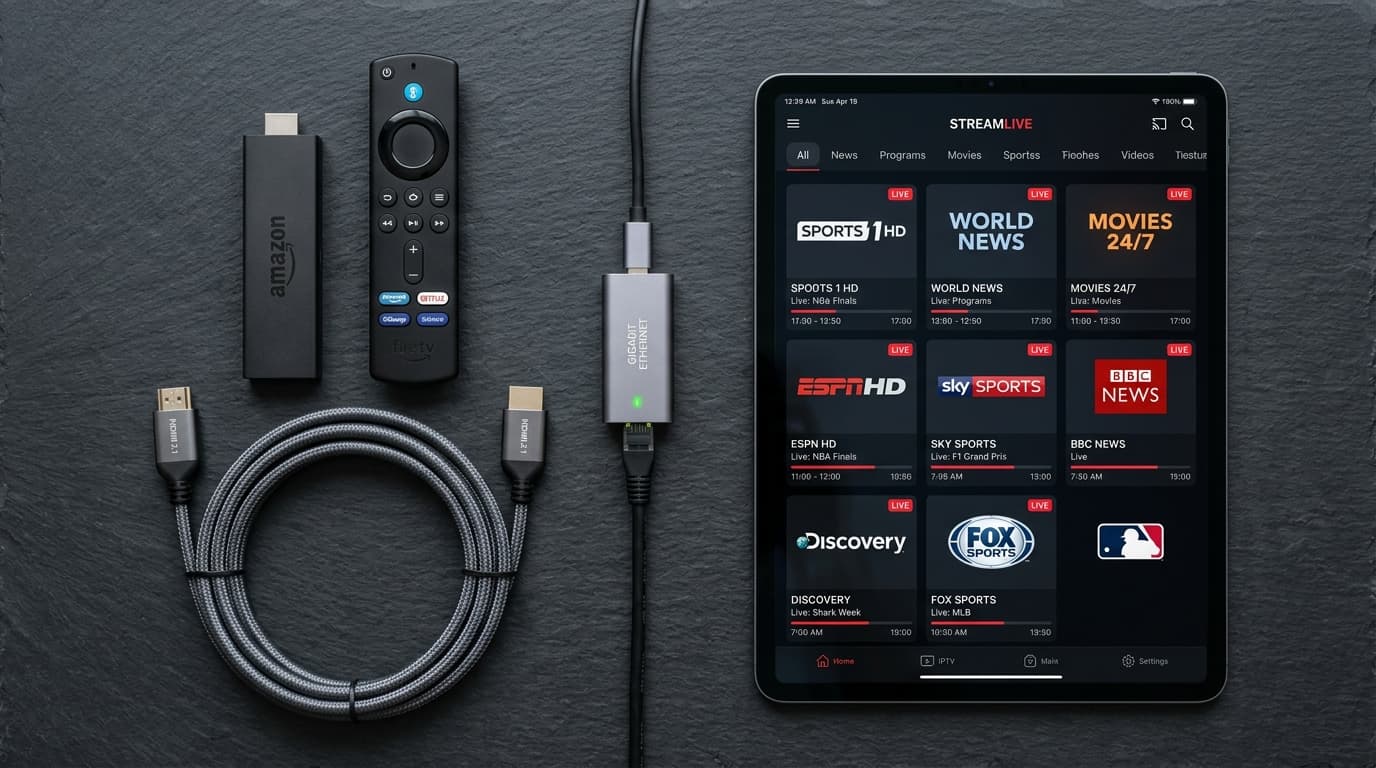
| Amazon Fire TV Stick 4K Max | Quad-Core 2.0 GHz, Wi-Fi 6E | AV1, HEVC, Dolby Atmos | Most cord-cutters seeking the best performance per dollar |
| Nvidia Shield TV Pro | Tegra X1+, Gigabit LAN | AI 4K Upscaling, HEVC, Dolby Vision | Power users and dedicated home theater setups |
| Apple TV 4K (3rd Gen) | A15 Bionic, Gigabit LAN | HEVC, HDR10+, Zero Ad Interface | Premium Apple ecosystem households |
| Chromecast with Google TV 4K | Quad-Core A53, Dual-band Wi-Fi | HEVC, VP9, HDR10 | Secondary bedroom TVs and casual viewing |
To configure your equipment, follow our step-by-step Firestick IPTV setup guide or explore our complete library of IPTV setup tutorials.
5. Identifying Red Flags: Protecting Your Investment
Navigating the IPTV marketplace requires vigilance against predatory resellers and low-grade panels:
The “Lifetime Plan” Illusion
Avoid any service advertising a “lifetime subscription” for a single flat fee ($60 to $150). Maintaining streaming infrastructure requires continuous operational expenditures: CDN bandwidth egress, server rack leasing, software licenses, and engineering support. Operators selling lifetime deals capture initial cash, overload their servers, and shut down within months. Reputable platforms operate strictly on sustainable monthly, quarterly, or annual plans.
The 40,000 “Dead Channel” Illusion
Unscrupulous resellers boast catalogs of 30,000 to 50,000 channels. In practice, over half of these streams are broken links, low-resolution 480p feeds, or unmonitored loops that slow down your player's search engine. A curated lineup of 10,000 to 18,000 pristine feeds with active EPG and 60 FPS sports is far more valuable.
Unencrypted Payment Portals
Never purchase subscriptions through unencrypted payment gateways or forced peer-to-peer crypto transfers without clear buyer recourse. Legitimate platforms utilize secure, encrypted payment processors with standard fraud protections.
6. The 2026 IPTV Performance Scorecard
When testing a service, measure performance against these quantitative benchmarks:
| Performance Metric | Budget Reseller Panel | Industry Benchmark (Top Tier) |
|---|---|---|
| Average Stream Latency | 120ms – 350ms (High Jitter) | Under 25ms (Regional CDN Edge) |
| Broadcast Frame Rate | 25 / 30 FPS (Choppy Motion) | 50 / 60 FPS (Fluid Athletic Motion) |
| 4K Stream Bitrate | 6 – 9 Mbps (Heavily Compressed) | 18 – 25 Mbps (Uncompressed Quality) |
| Channel Zapping Speed | 4.0 – 8.0 Seconds | 0.8 – 1.8 Seconds |
| EPG Accuracy | Sporadic or Missing | 99%+ 7-Day XMLTV Sync |
| Peak Event Uptime | Frequent Weekend Freezes | 99.9% Redundant Failover |
Review our competitive, transparent packages on our IPTV subscription plans page.
7. How to Stress-Test an IPTV Service Before You Subscribe
Follow this systematic testing routine during your trial period:
- Test During High-Traffic Weekend Sports: Stream live matches on Saturday or Sunday afternoon when internet traffic peaks. If the feed remains stable without buffering, server capacity is genuine.
- Conduct Rapid Channel Switching: Flip through 15 channels consecutively across different categories. Each stream should initialize within two seconds.
- Verify Sports Frame Rate: Use a diagnostic player like VLC or TiviMate to confirm the video feed runs at 50 or 60 FPS.
- Scrub On-Demand Content: Fast-forward and rewind a 4K movie. Responsive VOD storage responds immediately without crashing the player.
- Evaluate Customer Support: Submit a question to support during your trial to evaluate responsiveness and technical competence.
For additional guidance on evaluating service providers, consult our comprehensive analysis of evaluating IPTV service providers. If you experience local network bottlenecks, read our guide on how to troubleshoot IPTV buffering.
8. Network Optimization for Flawless Playback
To ensure your home network matches your provider's server stability, implement these best practices:
Hardwired Ethernet
Connecting your streaming box directly to your router via Cat6 Ethernet eliminates wireless interference and packet jitter. Check our breakdown of internet speed requirements for streaming to verify your bandwidth headroom.
Bypass ISP Throttling
If your broadband tests at 200 Mbps but IPTV buffers during evening sports, your ISP may be throttling media packets. Utilizing a high-speed VPN encrypts your traffic and prevents ISP packet inspection.
Playback Buffer Tuning
In TiviMate or IPTV Smarters, set your playback buffer to “Normal” (1 second) for fast fiber connections, or “Large” (3 to 5 seconds) on wireless setups to absorb momentary network fluctuations.
Frequently Asked Questions
What defines the best IPTV service in 2026?
The best IPTV service in 2026 is distinguished by a geographically distributed multi-CDN edge network, uncompressed 4K streams running at native 60 FPS, modern H.265 (HEVC) compression, automated 7-day EPG guides, and seamless Xtream Codes API integration with players like TiviMate.
Why do cheap IPTV services buffer during big sports matches?
Budget services host their streams on a single unmanaged server. When thousands of subscribers tune into the same match simultaneously, the server's network bandwidth saturates, resulting in packet loss and buffering. Premium services prevent this using automated multi-CDN load balancing.
What internet speed do I need for a 2026 IPTV service?
A stable download speed of 15 to 25 Mbps is recommended for smooth 1080p 60 FPS streaming. For uncompressed 4K Ultra HD broadcasts, a connection speed of 35 to 50 Mbps ensures buffer-free playback with sufficient headroom for other home devices.
Can I watch on multiple TVs with one subscription?
Yes, provided you choose a multi-connection subscription plan. Standard single plans allow one active stream at a time, while upgraded tiers support two, three, or four concurrent devices streaming different channels simultaneously.
Why should I avoid lifetime IPTV subscriptions?
Live video streaming requires continuous server maintenance, CDN data transit, and licensing expenditures. Providers offering lifetime plans collect upfront cash, overload their servers, and shut down after a few months, leaving customers stranded without refunds.
How does Xtream Codes API differ from an M3U playlist?
An M3U playlist is a single text file containing thousands of raw stream URLs that must be downloaded completely whenever changes occur. Xtream Codes API connects directly to the provider's database, allowing your player to organize Live TV, Movies, and Series into clean categories with faster loading times.
Final Verdict & Getting Started
Upgrading to the best iptv service 2026 delivers superior picture clarity, massive cost savings, and unrestricted access to global sports and entertainment. Long-term reliability requires selecting a provider with dedicated CDN infrastructure, modern H.265 encoding, and responsive support.
Avoid cheap reseller traps and unsustainable lifetime offers. Prioritize verified server uptime, test candidate services during live weekend events, and pair your subscription with hardware like the Fire TV Stick 4K Max and TiviMate.
Ready for reliable, buffer-free 4K streaming with instant activation? Explore our IPTV subscription plans, view our complete IPTV streaming features, or consult our frequently asked questions to begin streaming today.