IPTV Providers: Technical Architecture, Evaluation Framework & Buyer's Guide
Cutting the cord used to mean sacrificing live sports, enduring clunky terrestrial antennas, or juggling half a dozen fragmented subscription apps whose combined monthly fees quickly eclipse traditional cable bills. As traditional broadcast distributors continue imposing annual rate increases and rigid long-term contracts, millions of cord-cutters have turned to iptv providers to stream global linear television, premium live athletics, and extensive on-demand catalogs over standard consumer broadband.

1. Understanding IPTV Providers: Direct Ingestion vs. Reseller Panels
The single most consequential factor determining stream stability, picture fidelity, and channel uptime is where an IPTV provider sits in the global broadcast distribution chain. The market is divided into distinct structural tiers, each operating with radically different infrastructure costs and performance ceilings.
Enterprise platforms invest in dedicated ground teleports with commercial parabolic satellite dishes, capturing uncompressed master feeds (25-45 Mbps). Video passes through high-density rackmount transcoders (HEVC/H.265) directly into private multi-CDN edge nodes with sub-10-second latency and automated failover.
Middlemen who purchase bulk credits from wholesale offshore panels. They own no satellite dishes or hardware encoders. Streams are hosted on heavily overbooked virtual private servers (VPS). During major sports matches, network cards hit bandwidth ceilings, causing systemic buffering and blackouts.
2. The 7 Technical Pillars of a Reliable IPTV Provider
Distinguishing an enterprise streaming platform from an unstable reseller panel requires an objective evaluation methodology. When auditing prospective providers, inspect these seven core architectural pillars:
Pillar 1: Anti-Freeze Architecture & Multi-CDN Load Balancing
Genuine anti-freeze technology pairs dynamic multi-CDN DNS routing with intelligent packet buffer management. When user traffic spikes in a specific geographical zone, automated load balancers reroute video chunk requests to alternate edge Points of Presence (PoPs) without interrupting playback.
Pillar 2: True 60FPS Motion Clarity vs. 30FPS Interpolation
Fast-moving sports (football, hockey, basketball, motorsport) require 50 or 60 frames per second (FPS) to eliminate motion blur and judder. Premium providers ingest native 60FPS feeds directly from master stadium uplinks rather than artificially duplicating 30FPS video frames.
Pillar 3: HEVC/H.265 Compression & Bitrate Allocation
Modern H.265 (HEVC) encoding delivers approximately 40-50% superior compression efficiency compared to legacy H.264, enabling crisp 4K HDR at 18-25 Mbps and flawless 1080p60 at 8-12 Mbps without macroblocking during complex stadium lighting and crowd pans.
Pillar 4: Electronic Program Guide (EPG) Accuracy & Catch-Up TV
Automated XMLTV schedules updated daily eliminate "No Information Available" errors across channels. Integrated 3 to 7-day server-side catch-up allows viewers to rewind live TV or replay missed matches directly from the timeline grid without manual DVR recording.
Pillar 5: Server Scalability During Peak Live Sports Events
A provider's stability is measured during concurrent high-profile sporting events. Resilient providers maintain 300%+ network bandwidth headroom, isolated API authentication microservices, and localized caching tiers that prevent peak-hour server collapses.
Pillar 6: Native Xtream Codes API & Universal Hardware Support
Standardized Xtream Codes API credentials and M3U8 playlists empower you to choose industry-leading standalone players like TiviMate, IPTVX, or Smarters Pro instead of forcing dangerous, ad-laden proprietary APK applications.
Pillar 7: Transparent Non-Recurring Billing & Responsive Support
Legitimate services utilize secure checkout systems without predatory recurring auto-debits, backed by dedicated technical desks reachable via WhatsApp and ticketing systems for rapid configuration guidance.
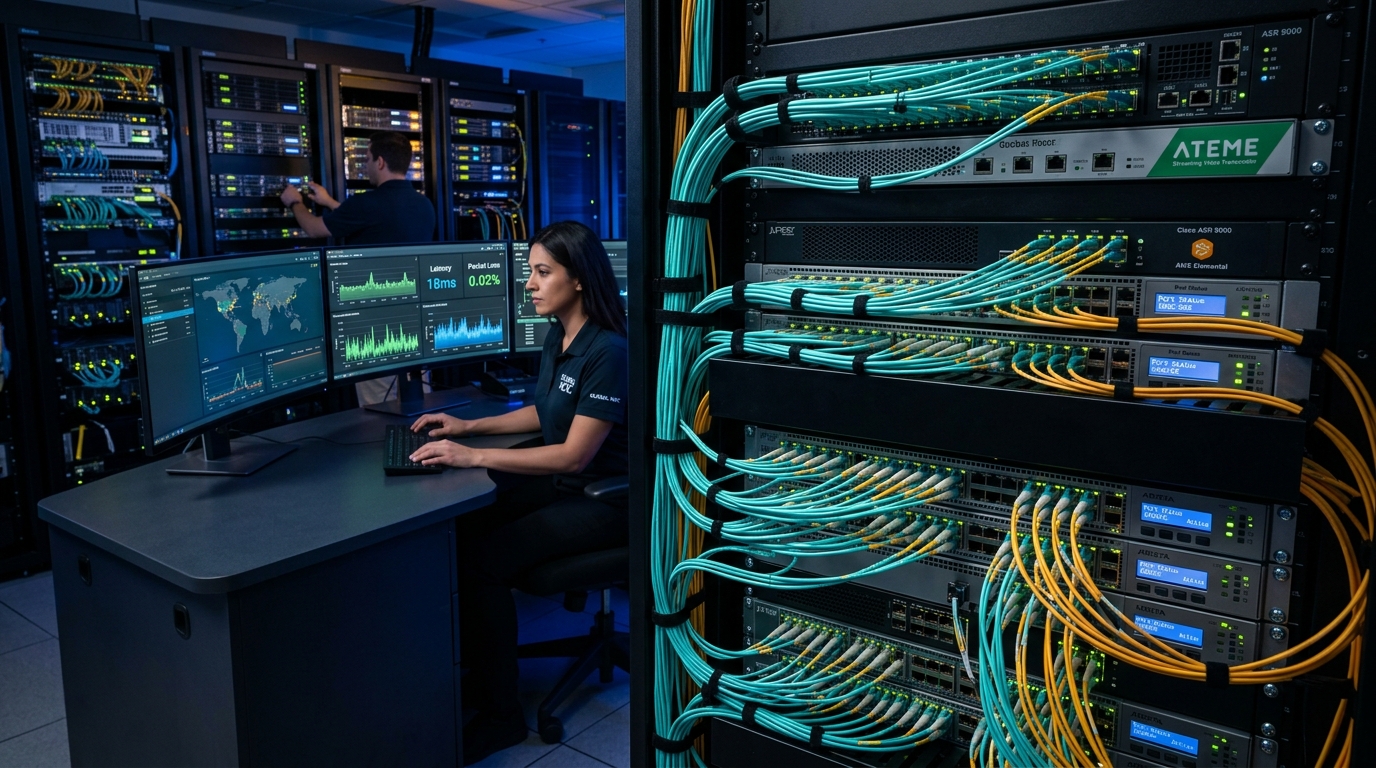
Figure 2: Multi-CDN edge routing and hardware transcoding clusters eliminate stream congestion by distributing live viewer traffic across geographical nodes.
3. Direct Comparison: Provider Tiers and Server Architecture
To assist in evaluating potential providers, the comparison matrix below contrasts the technical infrastructure, stream delivery, and operational stability across the three common market tiers:
| Evaluation Metric | Tier-1 Enterprise Provider | Tier-2 Managed White-Label | Tier-3 Bulk Reseller Panel |
|---|---|---|---|
| Broadcast Ingestion | Dedicated satellite teleports & optical fiber | Hybrid ingest & shared uplinks | Re-streamed / scraped web feeds |
| Server Infrastructure | Multi-CDN edge nodes + load balancing | Regional VPS clusters | Single bare-metal server (oversold) |
| Sports Motion Clarity | Native 1080p/4K at 50/60 FPS | Mixed 1080p 30/60 FPS | 720p/1080p at 25/30 FPS (stuttering) |
| Peak Event Stability | Ask for uptime records | Occasional micro-buffering | Frequent total service blackouts |
| EPG & Catch-Up | Automated XMLTV + 7-day catch-up | Standard EPG, sporadic catch-up | Missing schedules ("No Info") |
| Protocol Flexibility | Xtream Codes API & M3U8 URLs | Xtream Codes API & M3U | Locked to single proprietary APK |
| Billing Transparency | Transparent terms (1, 3, 6, 12 mo.) | Fixed terms or manual renewal | Deceptive "Lifetime" schemes |
| Technical Support | Dedicated 24/7 WhatsApp & ticket desk | Email ticketing (slow turnaround) | Unresponsive or deleted accounts |
4. Red Flags: How to Spot Predatory and Unstable IPTV Providers
The "Lifetime Subscription" Trap
Live television infrastructure demands continuous capital for satellite transponders, bandwidth transit, and transcoder hardware. Anyone offering a $50 "lifetime" pass will simply vanish once signup volume flattens.
Inflated "50,000+ Channels" Claims
Artificially bloated channel lists are stuffed with dead links, blurry 480p streams, and duplicate feeds. A curated lineup of 10,000 to 18,000 active, verified 1080p60 and 4K channels delivers a vastly superior experience.
Mandatory Sideloaded Proprietary APKs
Refusing to provide standard Xtream Codes credentials forces you onto poorly coded custom apps that may harvest device telemetry, inject ad banners, and prevent hardware video acceleration.
Anonymous-Only Payment Portals
Services that strictly enforce non-refundable cryptocurrency or obscure gift cards while hiding business contact details leave consumers with zero chargeback recourse when streams fail.
5. How to Test an IPTV Provider: A Step-by-Step Benchmark Protocol
Stress-Test During Weekend Primetime
Benchmark streams on Saturday afternoon or Sunday evening during major football matches. Verify instant channel switching (under 2 seconds) and ensure zero cyclical re-buffering occurs.
Inspect Playback Telemetry & Frame Rates
Use TiviMate or VLC to inspect video codec details. Confirm 1920x1080 or 3840x2160 resolution, true 50.00 or 59.94/60.00 FPS motion rates on sports feeds, and uncompressed multi-channel audio.
Validate EPG Accuracy & Catch-Up Replays
Ensure program schedules load within 60 seconds. Test 7-day catch-up by rewinding the program grid to launch a previously aired match, verifying seamless playback from the provider's rolling archive.
Verify Multi-Device Concurrency
If subscribed to a 2 or 3-device plan, stream high-bitrate feeds simultaneously on different screens in your home to confirm the API server permits simultaneous connections without throttling.

Figure 3: A dependable IPTV provider integrates seamlessly with native hardware players, maintaining synchronized EPG metadata and instantaneous channel switching.
6. Hardware Recommendations: Optimizing Your Playback Setup
Achieving flawless streaming performance requires pairing a high-capacity IPTV subscription with dedicated hardware capable of processing high-bitrate video streams:
Fire TV Stick 4K Max
Best budget-to-performance balance. Wi-Fi 6E connectivity, hardware-accelerated HEVC/AV1 decoding, and rapid TiviMate interface rendering.
Apple TV 4K (3rd Gen)
The flagship benchmark. A15 Bionic chip delivers instantaneous channel navigation in IPTVX and UHF with native tvOS frame rate matching.
Nvidia Shield TV Pro
Audiophile and home theater standard. Features AI 4K upscaling, gigabit Ethernet, and lossless Dolby Atmos audio passthrough.
7. Pricing Realities: What Legitimate IPTV Providers Cost
Because enterprise server bandwidth, satellite ground stations, and multi-CDN peering agreements require continuous investment, reputable providers operate within realistic price bands:
Ideal for testing peak-hour weekend server stability and channel lineups before committing.
Optimal balance of cost savings, seasonal sports coverage, and subscription flexibility.
Best overall value (~$5.00/mo), slashing annual entertainment bills compared to traditional cable.
8. Frequently Asked Questions About IPTV Providers
What is the primary difference between an IPTV provider and an OTT streaming app?
Traditional OTT apps like Netflix or Prime Video specialize in on-demand video libraries served over open internet CDNs. An IPTV provider focuses on linear broadcasting—transmitting live television channels, sports networks, regional affiliates, and scheduled pay-per-view broadcasts in real time over IP protocols using dedicated stream management servers and structured EPG schedules.
How much internet speed is required to stream from IPTV providers without buffering?
For standard definition and 720p HD channels, a stable internet connection of at least 10 to 15 Mbps is sufficient. For Full HD 1080p at 60 FPS, allocate a dedicated download speed of 25 to 30 Mbps per active screen. If you plan to stream native 4K UHD broadcasts with multi-channel surround sound, ensure your broadband connection delivers at least 50 Mbps of consistent, unthrottled throughput.
Can I use a single IPTV provider account on multiple televisions simultaneously?
Account concurrency depends entirely on the subscription plan you select. Standard base packages typically allocate one simultaneous connection. If your household requires viewing across multiple rooms, select a dedicated 2-connection or 3-connection multi-room subscription plan.
What is the difference between an M3U playlist and the Xtream Codes API?
An M3U playlist is a raw text file or URL containing the web addresses of every individual channel stream. The Xtream Codes API is a structured client-server communication protocol. Instead of downloading a massive text file, the player sends lightweight API requests that instantly organize channels into neat categories, sync EPG data automatically, and streamline catch-up TV requests.
Why do some IPTV providers buffer only during live sports matches?
Sunday afternoon and evening buffering is the classic symptom of an oversubscribed reseller server. Inexpensive providers pack thousands of subscriber accounts onto low-tier VPS hosting. During marquee football games or championship fights, thousands of users simultaneously tune into the same high-bitrate feeds, saturating server bandwidth and forcing player buffering.
Do I need to use a VPN with IPTV providers?
While a high-performance IPTV provider delivers secure, encrypted stream connections directly to your device, using a reputable Virtual Private Network (VPN) can be beneficial if your local Internet Service Provider (ISP) actively inspects and throttles high-bandwidth streaming traffic during peak evening hours.
Related Cord-Cutting & Setup Resources
Ready to Experience nobiptv?
Join thousands of satisfied viewers. Get the best IPTV services with our premium IPTV subscriptions and dedicated support.