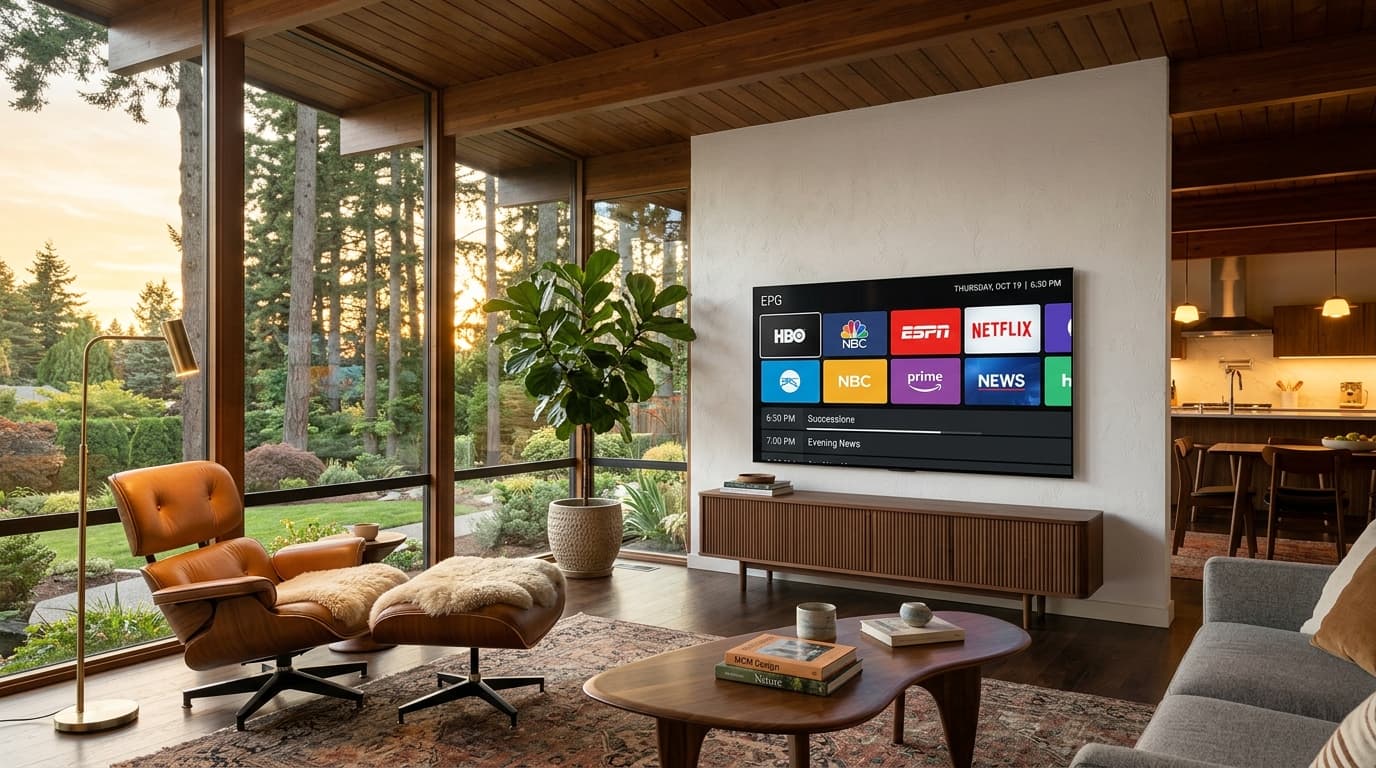
For American households, the financial reality of traditional television has reached a tipping point. Between base subscription rate hikes, regional sports network (RSN) surcharges, broadcast TV fees, and mandatory set-top box rental charges, the average US cable or satellite bill now routinely exceeds $160 to $220 each month. Meanwhile, attempt to assemble an equivalent lineup across legal streaming apps (YouTube TV, Hulu + Live TV, Peacock, Paramount+, ESPN+, and league passes), and monthly costs quickly climb back into three digits while fragmenting the viewing experience across half a dozen apps.
This cost explosion has driven millions of US viewers to search for the best iptv in usa. An optimized IP television subscription offers a unified entertainment hub: local broadcast affiliates (ABC, CBS, NBC, FOX), national cable entertainment networks, regional sports coverage, and pay-per-view events delivered directly to your smart TV or streaming stick at a fraction of cable pricing.
However, streaming live IP television across the United States comes with unique regional demands. Massive geographic distances between coastal and central hubs, aggressive bandwidth shaping by major US Internet Service Providers (ISPs), and time-zone-shifted program guides mean that generic overseas IPTV services routinely fail in American living rooms. This comprehensive guide evaluates what defines the best IPTV service in the USA, how to verify true North American server infrastructure, how to defeat domestic ISP throttling, and how to choose a reliable provider for your home.
1. The Real Cost of US Television: Cable vs. Skinny Bundles vs. IPTV
To understand why American cord-cutters are transitioning to IPTV, examine the true annual cost breakdown of traditional US television distribution methods:
| Service Model | Average Monthly Cost | Hidden Fees & Equipment | Sports & RSN Availability | Annual Household Expense |
|---|---|---|---|---|
| Legacy US Cable / Satellite | $130 – $190 / mo | $15–$25 broadcast fees, $10/box rentals | Locked behind high tiers | $1,800 – $2,600 / yr |
| Live TV Streaming Bundles | $79 – $95 / mo | 4K ($10/mo), sports add-ons ($15/mo) | Partial RSNs; blackouts apply | $1,100 – $1,500 / yr |
| Standalone Apps Fragmented | $60 – $85 / mo | Multiple logins, complex switching | Incomplete live coverage | $720 – $1,020 / yr |
| Premium US IPTV (nobiptv) | $12 – $18 / mo | Zero box rentals, zero surcharges | Full RSNs, Sunday Ticket, PPVs | $120 – $180 / yr |
2. What Separates the Best US IPTV Providers from Cheap Overseas Clones?
Anyone who has tested random IPTV sellers on social media knows the common frustrations: streams freeze right at 8:00 PM Eastern Standard Time, the program guide shows European UTC schedules, and local news channels are missing entirely. A provider engineered specifically for American audiences must meet five technical standards:
1Distributed North American Edge CDN Routing
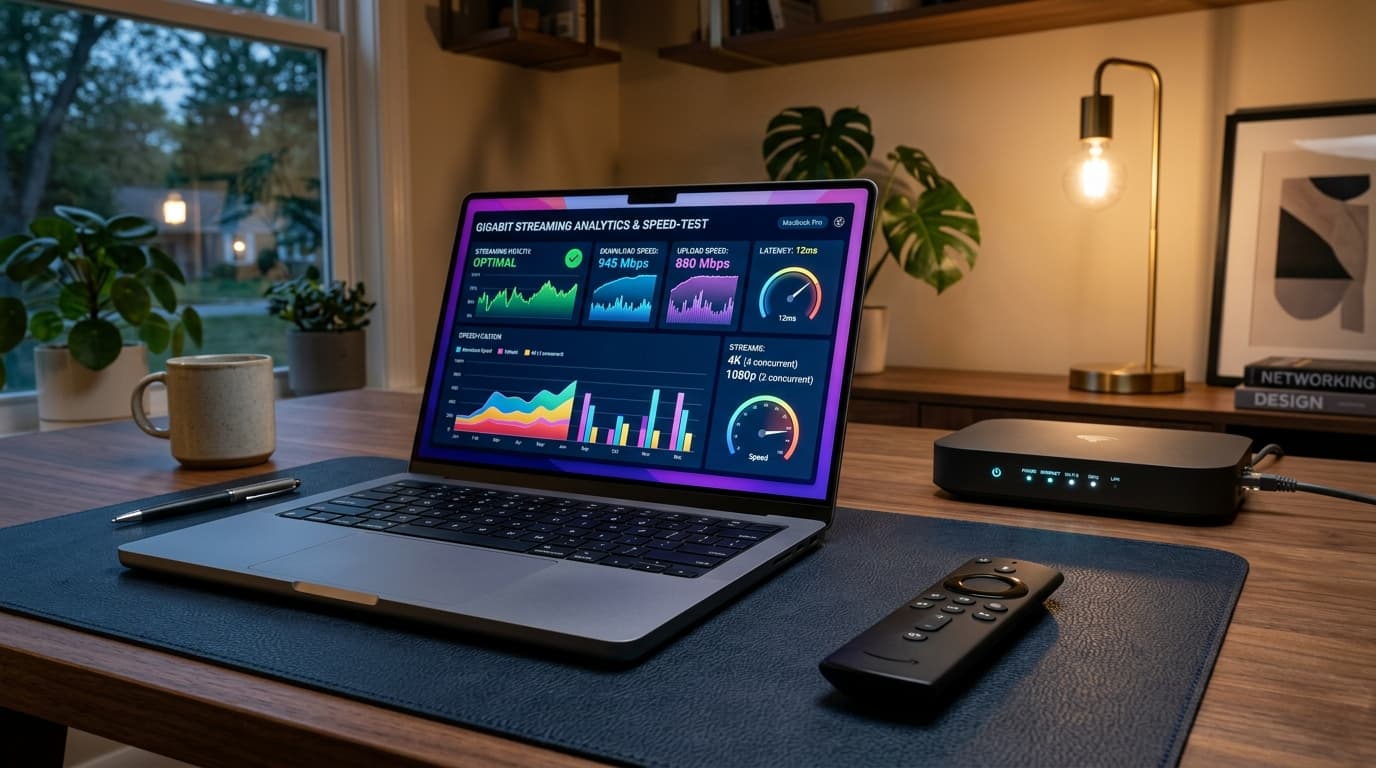
The continental United States spans four primary time zones across nearly 3,000 miles. If a provider's streaming servers are physically located overseas, ping latency will exceed 120–160ms, triggering endless buffering during primetime hours.
2Comprehensive Local Affiliate Channels (East & West Coast Feeds)
For an IPTV service to function as a complete cable replacement, it must offer local network feeds for the "Big Four" broadcast networks: ABC, CBS, NBC, and FOX. Top US providers deliver localized affiliates across major metropolitan markets (New York, Los Angeles, Chicago, Dallas-Fort Worth, Atlanta, and San Francisco) alongside both East Coast (EST) and West Coast (PST) feeds.
3Regional Sports Networks (RSNs) with Zero Blackout Restrictions
Major leagues frequently block local fans from watching in-market games on national streaming platforms. The premier US IPTV services deliver complete lineups of Regional Sports Networks:
4Accurate Multi-Time-Zone Electronic Program Guide (EPG)
A cable replacement is unusable if the on-screen guide displays programming offsets that don't match your wall clock. Top US providers maintain dedicated XMLTV guide feeds synchronized with Eastern (EST), Central (CST), Mountain (MST), and Pacific (PST) daylight savings schedules.
5Transport Encryption to Neutralize Aggressive US ISP Throttling
Major American broadband providers—including Comcast Xfinity, AT&T Internet, Charter Spectrum, and Cox—deploy deep packet inspection (DPI) to throttle unencrypted video streaming ports during live sports events. Top-tier services utilize SSL/TLS encrypted transport tunnels to prevent your ISP from artificially degrading your stream.
3. Essential US Channel Lineup Checklist
Before subscribing to any IPTV platform in the USA, verify that their channel directory includes these fundamental American programming categories:
[Core American Programming Directory]
• 1. Local Broadcasts: ABC, CBS, NBC, FOX, CW, PBS (Major DMAs)
• 2. Primetime Entertainment: USA, TNT, TBS, FX, AMC, Bravo, HGTV, TLC
• 3. 24/7 News Networks: CNN, Fox News, MSNBC, CNBC, Bloomberg, C-SPAN
• 4. National Sports: ESPN (1/2/U/News), FS1, FS2, NFL Network, CBS SN
• 5. Regional Sports (RSNs): FanDuel Sports, YES, NESN, Marquee, NBC SN
• 6. Out-of-Market Sports: NFL Sunday Ticket feeds, RedZone, NBA, MLB
• 7. Premium Movie Multiplexes: HBO / Max, Showtime, Starz, Cinemax
• 8. Kids & Family: Disney Channel, Nickelodeon, Cartoon Network
4. Hardware Guide: Choosing the Best Streaming Device for US Homes
Your streaming experience depends heavily on the hardware decoder attached to your television.

Amazon Fire TV Stick 4K Max
The most popular streaming device in American homes. Features a quad-core processor, 2GB RAM, and Wi-Fi 6E. Sideloads TiviMate and IPTV Smarters in under 3 minutes via Downloader. See our best IPTV apps for Firestick.
Apple TV 4K (3rd Gen)
The premium choice for Apple households. The A15 Bionic chip delivers instant channel zapping, liquid 60FPS UI rendering, and zero frame drops with players like GSE Smart IPTV and IPTVX.
NVIDIA Shield TV Pro
The enthusiast benchmark for home theaters. Features gigabit Ethernet, hardware AI upscaling, and robust processing for multi-screen Multi-View sports viewing.
Roku Devices (Limitations)
Roku OS strictly blocks third-party IPTV apps. You must cast from an Android phone or AirPlay from an iPhone. Upgrading to an inexpensive Fire TV Stick or Google TV box provides a superior remote-friendly experience.
5. How to Overcome Buffering and US ISP Throttling
If your IPTV connection suffers from sudden freezing during US primetime hours, apply these configuration fixes. For deeper diagnostics, read our guide on how to troubleshoot IPTV buffering and playback issues:
1. Switch to Secure Third-Party Public DNS
US broadband providers frequently delay DNS lookups to streaming servers. Change DNS on your router or streaming stick to Cloudflare (1.1.1.1 / 1.0.0.1) or Google DNS (8.8.8.8 / 8.8.4.4) to accelerate connection speeds.
2. Utilize a Reputable VPN on Your Streaming Hardware
If Comcast or AT&T shapes your video traffic during peak sporting events, running a VPN encrypts your packets, preventing your ISP from identifying streaming ports.
3. Connect via 5 GHz Wi-Fi or Hardwired Ethernet
The 2.4 GHz band is crowded with interference in US residential areas. Connect your streaming hardware to 5 GHz Wi-Fi or use an Ethernet adapter. Check our guide on recommended internet speeds for streaming.
6. How to Test a US IPTV Service Before Subscribing
Follow this verification checklist when evaluating IPTV with free trial options:
Test During US Prime Time (8–10 PM EST)
Assess server performance when domestic internet traffic is at its absolute peak.
Verify True 60 FPS on Local Sports Feeds
Confirm your local ABC, CBS, NBC, and FOX feeds output at 60 FPS, not jerky 30 FPS. See our best IPTV for sports guide.
Inspect Time Zone EPG Synchronization
Ensure program guides match your local wall clock schedule across EST, CST, MST, and PST.
Demand Transparent Payment & Support
Avoid untrusted crypto-only sellers. Choose providers with responsive customer support and transparent checkout.
7. Frequently Asked Questions
Is using an IPTV service legal in the United States?
IPTV technology itself is completely legal and is utilized by major telecom operators like AT&T, Verizon, and YouTube TV. However, third-party IPTV services that stream copyrighted television channels and sports broadcasts without obtaining regional licensing agreements operate in violation of US copyright laws. Users should verify whether their chosen service distributes authorized feeds.
Can I keep my local news channels if I cut the cord with IPTV?
Yes. Quality US IPTV services offer regional affiliate channels (ABC, CBS, NBC, FOX) across major American media markets, allowing you to watch your local morning news, weather updates, and regional programming seamlessly.
How much internet speed do I need for IPTV in the USA?
A reliable connection requires a minimum of 20 Mbps download bandwidth for a single 1080p 60FPS stream, and 35–50 Mbps for uncompressed 4K UHD broadcasts. If multiple people stream simultaneously in your household, a 100+ Mbps broadband plan is recommended.
Why do some IPTV channels stop working during Sunday football?
During NFL game days, millions of viewers access live sports streams at once. Budget providers running overloaded single-server panels experience bandwidth collapse. Premium providers use load-balanced multi-CDN edge nodes to distribute viewer traffic evenly across geographic regions, keeping streams buffer-free.
Does IPTV work on multiple TVs in an American home?
Yes, provided you choose a multi-connection subscription plan. Providers offer options with 2, 3, or 4 simultaneous streams, allowing family members to watch different games, news, or movies in the living room, bedroom, and kitchen concurrently.
Experience the Best IPTV in the USA with nobiptv
Get complete local network coverage, blackout-free regional sports, 60FPS stadium feeds, and dedicated North American CDN edge routing.